
Mycorrhizae
To improve the growth and resilience of your trees and plants, consider adding mycorrhizae. Arboplus recommends the use of mycorrhizal fungi to meet the nutritional needs of vegetation in urban and suburban soils. Acting directly on the root system and soil structure, mycorrhizae enhance the plant’s ability to absorb water and essential minerals.
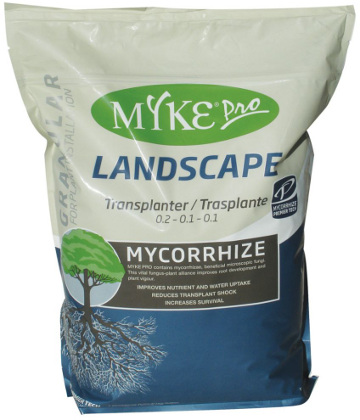
Our specialists use only MYKE PRO® products—recognized as among the most effective mycorrhizal solutions available on the market.
How Mycorrhizae Improve Soil Structure
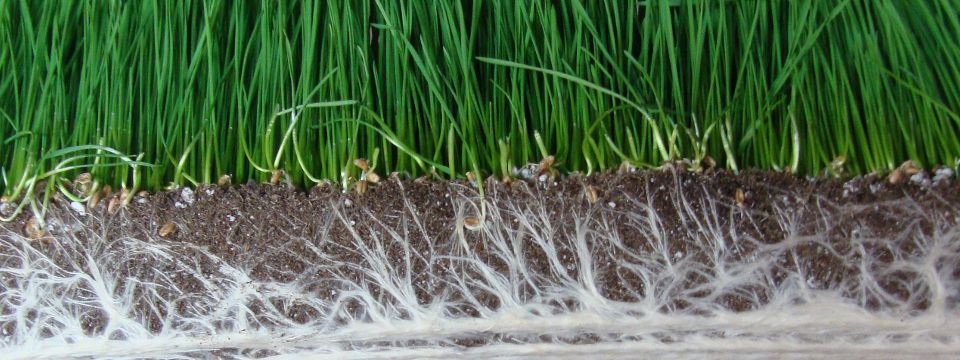
Mycorrhizae form a network of fine filaments connected to plant roots, allowing access to nutrients that would otherwise remain unavailable to the root system. This natural partnership between fungus and plant stimulates growth and accelerates root development.
In soils disturbed by human activity, mycorrhizal populations often decline significantly, reducing their positive impact on plant health. Arboplus therefore recommends adding MYKE PRO® to restore this essential biological balance.
Maintaining soil structure is critical for preserving soil function and fertility. Mycorrhizal fungi play a major role in soil structure through their hyphal networks and the production of glomalin—a natural biological “glue” that binds soil particles together. Strong soil structure leads to:
- Greater water infiltration and retention;
- Improved air permeability;
- Stronger root development;
- Increased microbial activity and nutrient cycling;
- Better resistance to surface crusting;
- Improved resistance to erosion (water and wind);
- Greater resistance to soil compaction.
Benefits of Mycorrhizae
Increase Survival Rates by Up to 75%
Roots enhanced with mycorrhizae have a greater capacity to absorb nutrients from the soil. The result: healthier, more vigorous plants that are better able to withstand stress.
Establish Up to 2 Times Faster
Mycorrhizal roots expand more rapidly thanks to the dramatic extension of the effective root system.
Reduce Watering Needs by Up to 30%
Mycorrhizae increase the surface area available for water absorption, improving overall water efficiency.
Increase Phosphorus Uptake
Phosphorus absorption in mycorrhizal roots can be three to five times greater than in roots without mycorrhizae.
Improve Soil Structure and Prevent Erosion
The filament network of mycorrhizae binds soil particles together, reducing erosion. Improved soil structure enhances water penetration, reduces runoff, and stabilizes the soil profile.
Types of Mycorrhizae
There are two primary groups of mycorrhizal fungi: ectomycorrhizal and endomycorrhizal fungi. Ectomycorrhizal fungi develop on the exterior of root cells, while endomycorrhizal fungi penetrate root cells and allow direct metabolic exchange with the plant.
Ectomycorrhizal fungi are most commonly associated with trees and may form visible structures. Endomycorrhizal fungi colonize trees, shrubs, and most herbaceous plants but do not produce visible structures. Other specialized types of mycorrhizae colonize orchids and plants in the ericaceous family.